Showing posts with label Lottie Moon. Show all posts

Saturday, August 1, 2015

10 things you probably didn't know about Lottie Moon

Lottie Moon, missionary to China from 1873 to her death in 1912, is the most famous person in Southern Baptist history. Our largest offering, the Lottie Moon Christmas Offering for International Missions, is named for her.

In time, her life came to be mythologized by Southern Baptists and her name invoked in order to raise money for missions. To counter this, here are ten things you probably did not know about Lottie Moon:

1. When funding from the Foreign Mission Board was not sufficient to provide additional workers for Moon's lonely and arduous mission in Pingtu, China, Lottie loaned the Board $1,000 to help support a new missionary. The sum is equivalent to about $25,000 today.

2. Moon's home in the seaport city of Tengchow was once hit by a shell from a Japanese warship. Moon was not home at the time. The bombardment was part of the Russo-Japanese War, 1904-1905.

3. At the 1890 meeting of the Southern Baptist Convention in Ft. Worth, Texas, it was said Lottie Moon: "She is the greatest man among our missionaries."

4. The Christmas offering later named for Lottie Moon was an idea copied from the Methodists.

5. Miss Moon was the first single female missionary woman sent out by the SBC Foreign Mission Board. No, not Lottie but her sister Edmonia (Eddie) who was one two single ladies appointed in April, 1872. Lottie followed soon thereafter in 1873. Eddie was often sick and left China for good in 1876.

6. Lottie Moon's uncle once owned Monticello, Thomas Jefferson's plantation, post Jefferson, of course.

7. When Moon arrived in China in 1873, she found that there was serious personal conflict among missionaries in the mission. This would cause difficulty for decades. She had to contend with and endure this constantly; whereas, the wars, famines, and plagues were just sporadic.

8. Among other things, Lottie endured at least two outbreaks of bubonic plague. She would simply close the school she was operating at the time and wait for the plague to pass.

9. When a new missionary asked Lottie in 1909 what the secret was to her long success in China (she had been in the country for 36 years at that point), Lottie answered, "Early to bed and do not worry."

10. Since she died while on a ship in a Japanese harbor, Lottie was cremated. The ship's captain was concerned that an embalmed body would not be allowed entry into the United States.

____________

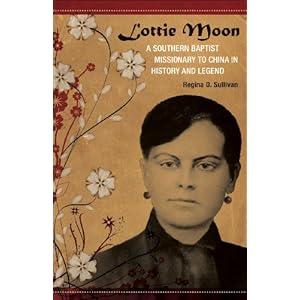
These are from "Lottie Moon: A Southern Baptist Missionary to China in History and Legend" by Regina D. Sullivan.

The photo of Lottie Moon is from the WMU. Although not the first to do so, Lottie was among the first to dress and live in the custom of the Chinese.

Monday, September 8, 2014

Cooperative Program gifts that bypass state conventions

One of the eyebrow raisers about David Platt's selection as the new president of the International Mission Board was the fact that his church gave a considerable amount ($100,000) directly to the SBC Executive Committee Cooperative Program Allocation Budget. In doing so his church bypassed the Alabama Baptist State Convention which would have lopped off more than half of that amount.

The usual routine is for a church to send their CP gifts to their state convention which keeps most of the money (varies by state but well more than half on average) and sends the remainder to the Executive Committee which by an approved allocation formula keeps a tiny slice and sends the rest to the mission boards, seminaries, and Ethics and Religious Liberty Commission.

Churches have always had the option of handling their CP gifts by sending them directly to the EC but not many have availed themselves of it.

This may be changing.

Shown below is the percentage of direct gifts to the Executive Committee CP allocation budget (those that bypass state conventions) as a percentage of total Executive Committee CP gifts:

2011-2012                 2.2%
2012-2013                 2.4%
2013-2014 (YTD)    3.0%

The route Platt's church has taken is not followed by many churches nor for much CP money, about 3% of the total for the eleven months of this fiscal year; however, the proportion is growing. The total amount of CP monies given directly is small, a little over $5 million so far this year. The EC hasn't released the number of churches who give in this manner.

The popular younger SBC minister website, B21, has an article by Jon Akin, CP: Another Way? In this article Akin suggests sending that CP check to the Executive Committee with the instruction that they send 50% back to the state convention for the sending church.

I judged that alternative to be too unwieldy to gain much traction (mainly because of the kickback from EC to the state, makes no sense to add that step) but the option of sending money directly to the EC is growing. Because of his election as IMB president, David Platt's former church is now the poster church for that methodology.

You can like it. You can dislike it. It is part of 21st Century SBC reality.

There are some things growing in Southern Baptist life, brethren. Here are three:

1. Direct gifts to the Executive Committee CP allocation budget, small amounts but growing.
2. Great Commission Giving (see my piece, UPDATED: Great Commisstion Giving vs Cooperative Program Giving, How's That Working Out?). GCG is growing fast but we haven't had much in the way of data reported, just three year's worth.
3. Designated giving received by the Executive Committee, mainly Lottie Moon and Annie Armstrong offerings which show slight increases. The EC now receives more in designated giving than in CP giving.

This is where we are. I see nothing that will change it.


Sunday, August 24, 2014

UPDATED: Great Commission Giving vs Cooperative Program Giving, how's that working out?

We now have three years of the reporting of our new SBC giving metric, Great Commission Giving. GCG is an aggregate figure that is intended to report on our beloved Annual Church Profile (my state calls it the Annual Church Report, not sure if this is SBC-wide change or not) all giving to SBC and state convention causes including Cooperative Program, Lottie Moon, Annie Armstrong, any direct gifts to one's local association, to the seminaries or other SBC entities, and any direct gifts to any state convention entities such as children's homes, etc. All giving to Southern Baptist causes should be included in a church's GCG figure.

(I note here that there are a couple of caveats to whatever GCG statistics one uses, (a) it is a self-reported figure by churches not independently verified by a state convention or other entity. If a church chooses to toss into their GCG money given to Samaritan's Purse, the Gideons or whatever, no one can ferret that out, and (b) some states don't ask the same questions on their ACP. Generally though, figures reported as GCG are valid for comparison purposes.)

So, how's our mission giving looking in the SBC with our new measure?

Depends on ones point of view. Those who have a higher reverence for the Cooperative Program will not be happy Baptist campers these days because they believe that the very fact that churches are asked to report GCG undermines the CP. I think this is mixed up thinking. Those who think that all money given by a Southern Baptist church that goes to any SBC, associational, or state convention entity is good, healthy, and should be celebrated will be pleased.

Cooperative Program Giving

2010-2011    $488m
2011-2012      481m
2012-2013      482m

Great Commission Giving

2010-2011     $696m
2011-2012       744m
2012-2013       777m

Notice any trends?

Cooperative Program giving has declined by 1.2% over this period while Great Commission Giving has increased by 11.6%.

Since GCG includes CP gifts the trend is even more marked if one extracts out CP and just measures the non-CP Great Commission Giving. In the above period the increase was an astounding 41.8%

But let's not get too excited. Southern Baptist churches are just beginning to report these numbers. Throw a curve ball at pastors and church secretarys and many will likely swing and miss a couple of times before they hit it. I don't think that GCG has grown nearly as aggressively as these figures show but rather churches are beginning to report more accurately their actual giving. One should probably throw out the 2011 figures for GCG altogether.

With all these caveats, provisos, and addenda can we begin to draw any conclusions about Southern Baptist giving trends?

I think so. There's not a lot new here. For some time it has been crystal clear that these trends are present:

1. Churches are giving less to the Cooperative Program. Duh. Plodder states the obvious. The tiny increase in giving of 2013 over 2012 is in my view just a temporary tick upward in the decades long trend of decline. The Executive Committee's fiscal year ends in a few weeks. I predict that the CP will show another decrease.

2. Churches are giving slightly more to the two major mission offerings - Lottie Moon and Annie Armstrong. Our churches have always held strong commitments to international missions and the LMCO has had some modest increases the past few years. After some years of turmoil and dysfunction, our North American Mission Board has stable leadership and a program, Send North America, that is appealing to many Southern Baptist pastors and churches. The AAEO has seen some very healthy inreases as a result.

3. Churches are showing a slight increase in other designated, direct funding of SBC, state convention, and, associational causes. The portion of GCG that is not Cooperative Program or the two mission offerings makes up only about 10% of the total GCG but it is a growing component.

So what do we make of all this?

Some Cooperative Program supporters believe that the very act of reporting GCG motivates churches to give less to the CP. I think not.

My conclusion is that GCG merely reflects the same trends shown by the choices of churches in their mission giving - less to the Cooperative Program, more to Annie and Lottie, more directly to some SBC entities and causes.

Can anything be done to change the trends?

I think not much. No one is putting forth a compelling plan for any Cooperative Program increase. Since most CP dollars stay with the states, do you see anyone raising the battle cry that state conventions need more funding? I don't. The best we can expect is that the CP will reach a floor as a percentage of church receipts. It's a bit above 5% now.

Some major SBC leaders are talking of finding ways to do more with less from the CP and at the same time find a way to get even more funding to missions. One can translate this to conclude that the CP is seen as a valuable asset but more of a legacy brand whose limitations are known, whose consistent downward trajectory should be managed and minimized. Correspondingly, those core mission entities such as the seminaries, IMB, and NAMB are casting about for alternative funding sources that might yield more revenues. The end result is that the CP, while still a giving powerhouse for our ministries, simply isn't what it used to be nor will it ever ascend to earlier heights.

It seems that it is a fait accompli that the CP will decrease and other giving methods will increase.

I would be happy to be persuaded otherwise. Someone put forth a workable plan.

Update: David Platt, our new IMB leader, is a good example of the trends above. His church gave a little to the CP, direct gifts to the SBC Executive Committee, large Lottie Moon offerings, and large direct gifts to the IMB for particular partnership projects. He is one who clearly has concluded that the Cooperative Program as currently structured, while valuable to us, is insufficient for the needs of our time in regard to The Great Commission.


Monday, December 30, 2013

2013 Predictions, Plodder is no genuine prophet

...but would win the batting championship if this were baseball. My predictions for this year and evaluation of the same:

1. Fred Luter will be reelected. Nothing big to happen here. In a moment of prescience, I got this one right.

2. There will be contested SBC vice president elections. Got this right as well. A little known blogger elected as 2nd VP in a session that clearly lacked a quorum. While the 2nd VP is a rather obscure and meaningless position, we should follow our own by-laws in the future. Parliamentarians and presiding officers please pay closer attention.

3. The Ethics and Religious Liberty Commission will get a new leader. Whomever he is will have some work to do to restore credibility. Right again. Russell Moore, and he has started well, although unprepared for the Housing Allowance court decision.

4. Frank Page's Calvinist Advisory Team will issue a report early this year.  Whatever they end up with will probably be quickly forgotten. Right again. They issued a report that I judged to get some things right and missed the mark on some other things . Quickly, what did the report say? That's what I thought. It's all forgotten now. There was a bit of an eruption over damnation of infants but that has subsided. 

5. I predict that Calvinism in the SBC will look back on 2012 as their high water mark and that SBC Calvinist news for 2013 will be mostly unhelpful to their movement. On the first part, it is too early to tell. Judge me guilty of making a macro prediction. On the 2013 Calvinist news being unhelpful, maybe. Jason K. Allen, new head of Midwestern Seminary made some remarks I thought unhelpful.

6. Some SBC agencies will hire senior level staff who are African American. Well, if they have they are under the radar. 

7. In contrast to the above, the only high profile females in SBC life will be wives of prominent pastors. Name any senior staff level females in any SBC entities. Right on this one.

8. The Cooperative Program will continue to be flat, which is a welcome improvement. Wrong. The CP showed another decline, only about 2%, but that is not flat. It's more of the gentle downward incline. Some states, Georgia for one, showed surprisingly steep drops in CP giving. 

9. State conventions will continue to feel the most pressure financially and more churches will use various methods to fund NAMB and the IMB directly without diluting their giving to these through the Cooperative Program. True and correct. Both major mission offerings increased last year while the CP dropped. If the trend lines continue for a decade or so there will be as much given to Lottie Moon alone as to the entire SBC portion of the CP. 

10. What is euphemistically termed "complementarianism" will have a bad year, mainly due to a few high profile Calvinist churches. Nah, nothing much happened here. 

11. GuideStone will finally accede to political realities and get around to addressing the reality of Obamacare as it relates to their comprehensive health insurance for ministers. The outcome will not be good. I give myself a neutral grade here. GuideStone was rather quiet on ObamaCare except for the abortion/birth control mandate. They have announced that they will no longer write individual policies. Only God knows what is ahead for SBC ministers and GuideStone comprehensive health coverage, although we all know it will continue to cost more if they offer it.

12. Southern Baptists my age will continue to lament the absence of Adrian Rogers or anyone of his stature. Since I so lamented, I judge myself correct here.


What I did not see coming?

The housing allowance, our Sacred Clergy Tax Break, being ruled unconstitutional. I will certainly have a prediction for 2014 on this.


Friday, July 12, 2013

Meet the pastor of Lottie Moon's home church

How about a little irony on Friday?

The photo above (ABP) is of the new pastor of Scottsville Baptist Church in Charlottesville, VA, the church of which Lottie Moon was a member until her death in 1912. Bob Allen has a story about this here. Don't look for Baptist Press to be carrying this story.

We can all speculate safely about what Lottie would have thought about this, since she is not around to prove or disprove any assertions but I think I can safely say that Lottie would deplore one thing: the paucity of single Southern Baptist males who commit themselves to the two year Journeyman program which places singles and couples overseas for two years.

About two of three Journeyman personnel are...uh...female, a reality that troubles Danny Akin, me, and a few other Southern Baptists. One wonders if the SBC's Council of Biblical Manhood and Womanhood, a denominational artifice which may be focusing on the wrong 'hood - seems that manhood or the lack thereof is the critical factor these days, not inappropriate expressions of womanhood.

At the moment, my most read blog piece is Young, male, restless conservative SBCers: Sniveling Wimps.

I have been waiting for six months for someone to convince me that 'sniveling wimps' is an inappropriate descriptor for the Journeyman situation or at least explain why young SBC males aren't answering the call, or why God seems to be calling twice as many females as males to this work.

I wish the Scottsville Baptist Church and their new pastor well. 

Monday, March 25, 2013

Annie Armstrong - 1933

Among some things found after my mother's death was this Royal Service magazine from March, 1933, the issue that featured the Week of Prayer for Home Missions of eighty years past. The graphic is the offering's promotional poster for that year.

The Annie Armstrong goal that year was $80,000, a tidy sum equivalent to about $1.4 million today. This year's Annie Armstrong goal  is $70 million.

This idea was among the suggestions for achieving the offering goal:


On the prayer calendar for that month was Martha Franks, legendary missionary to Tsining, China and now namesake of a retirement home in South Carolina. She and Bertha Smith were the nextgen Lottie Moons. 

Sure, we are far better with graphics and much more ambitious and sophisticated with our offering promotion but after perusing this issue of Royal Service I don't see that we are any more zealous about reaching America for Christ that we were 80 years ago.
 

Thursday, December 13, 2012

Patriarchy has its limits, I suppose

What do we need to think about these  females, that gender-specific group that makes up fully two-thirds of the personnel of our Journeyman force of our wonderful International Mission Board? 
These are mostly single, college graduates who postpone marriage, home, kids, career, family to give two years to the Lord in overseas service, while their gender opposites cruise along on their dating, marrying career paths.

What must we think of this crowd?

I'd start by remembering the considerable history of single females on the international fields, Lottie Moon being the most famous but who is joined by many, many others.

I wrote about a year ago about the most recent Lottie Moon biography, Lottie Moon, the SBC's Most Heroic Figure. Author Regina Sullivan did a good job with this and I recommend it, although you will look in vain in the SBC to find any mention of it. The phrase "speculative feminism" has been used dismissively of modern treatments of our sainted missionary of long past.  Pay no attention to these. Read the book.

One notable thing about Sullivan's book is how Lottie Moon (and others) had considerable difficulty with men missionaries behaving administratively and attitudinaly badly. Read the book,  you will see.

Our current expression of ecclesiastical patriarchy, having been expanded in some SBC circles from "the office of pastor is limited to men" as outlined by the Baptist Faith and Message, is in a state of flux. Thank God those SBC leaders holding responsible denominational positions haven't lowered any patriarchal guns at the Journeyman program. Not a hint of it, but vigilance is the watchword on this.

While we are in the neighborhood: Quickly now, name one male SBC missionary figure of the past. 

Er, ah, ahem....

Lottie and patriarchy aside, because of a network of connections I have known several 'Journeygirls' (a term they use, not of my coining) and seldom find a better expression of Christian commitment and zeal than among them, not that the one-third male Journeymen lack the same.

Because of funding pressures, the appointments in this program can involve locations that entail service with some degree of difficulty and often relative isolation; nonetheless, these females answer the call. God bless them all.

Contrast that with the hotbed of our six seminaries brimming with mostly male students strolling to class, holding high minded theological discussions with fellow neophytes. Some of our seminaries, Southeastern and Midwestern come to mind, have taken to promoting themselves as "Great Commission Seminaries." One might rightly conclude that the "Great Commission" concept has not been fully embraced.

Manifestly, the current SBC emphasis on patriarchy has not filled the IMB with male mission candidates.


Monday, December 10, 2012

Young, male, restless conservative SBCers: Sniveling Wimps


Perhaps there is a more polite way to describe our bright, highly committed, single Southern Baptist young men but I humbly offer 'sniveling wimps' as one possibility of an apt description in the light of a startling statistic:


Two-thirds of the personnel who serve in the International Mission Board's Journeyman program are females. 

Let's see. Southern Baptist churches give over $300 million to our International Board to reach the world for Christ. An important and significant part of their mission force is a two year program for single college graduates and married couples without children. The IMB describes it thusly:
For the past 40+ years, more than 5,500 adventurous young college graduates have served all around the world as Journeyman missionaries. These Southern Baptist, twenty-something, single or married with no children college graduates wanted to do something more after graduation than just jump into a secular career ... they wanted to be on mission with God.
Apparently, far fewer of our finest male college grads are very adventurous. Two-thirds of those serving in the Journeyman program are females.

It gets worse.

Many of the priority locations for these personnel are in countries where males are culturally dominant and females highly restricted. So, God must have willing males to bridge this cultural divide? No doubt God does. Apparently, just not among Southern Baptists. It's the "willing males" who are deficient in the SBC not God.

Hey! You! Yeah, you. Young, restless, single, educated, reformed or not reformed. You! We will pay your way. We will give you a salary. We will train you. We will help you learn a language. We will stand behind you with vast resources. All you have to do is to be willing to go.

Oh, you're busy on the  warm and nurturing campus among encouraging friends and erudite professors. OK. 

Most of us, and few others, are aware that Southern Baptists are mainly responsible for The Council on Biblical Manhood and Womanhood. It is probably unfair, but the CBMW makes news primarily in the area of pronouncing what females cannot do in ministry positions or reacting to such things.

There are things to be explored here but I would recommend that the CBMW refocus at least some of their energy on Biblical Manhood and relax on the Womanhood business. Perhaps they could get funding to supply spiritual testosterone to the young, restless, educated males in the SBC so that they would step up to the task of The Great Commission somewhere other than church saturated Ft. Worth, Texas, reformed hotbed Louisville, Kentucky and elsewhere.

Perhaps our young, single, male seminarians, white hot for Christ, would lay aside plumbing the depths of supralapsarianism or the joys of the hypostatic union long enough to offer themselves to the Lord for service in some place where the name of Christ is seldom heard.

I ask: Is God calling only females to these places overseas? Surely not. If He were, it would be the Almighty's joke on Southern Baptists who disallow females as Senior Pastors but use them for the more significant service overseas.

Surely, a young man entering the SBC pastoral ministry where he will likely serve single-staff, mostly rural churches for his career and where he will be dealing with a people group who are Gospel-saturated could at least consider that God may call him to one of the many people groups elsewhere virtually without the Gospel.

And shouldn't every complementarian enthusiast, those who may be sitting behind a desk or standing behind a comfortable pulpit pontificating about women in ministry, begin by apologizing to every woman who has answered the call of God and has or is serving in these places where men were needed but who were unwilling to answer the call?

At the very least the IMB should rename the Journeyman program to the Journeywoman program or just the Journey program.

Lottie Moon, could you send us some more strident and pointed letters from the foreign fields...and address them to the young men of the SBC.
__________________

Addendum: The IMB does not release gender statistics for their mission personnel but I have heard SBC leaders address this issue of the female-dominated Journeyman force. Danny Akin in particular, I understand, minces no words with the young men at Southeastern seminary. I have also heard SBC presidents on the same subject.

As always, I welcome some more informed SBCer persuading me that a nomenclature other than "sniveling wimps" would be more appropriate.

Saturday, December 1, 2012

Lottie Moon: $175m or bust


The Lottie Moon Christmas Offering for International Missions, in millions, for the last 13 years.

The goal has been kept the same, $175,000,000, for the past four years in spite of the fact that receipts have been nowhere near the goal, not even in the neighborhood.

I think we are in a mode where lowering the goal (something that was done last in the year 2000 when it was dropped from $125m to $115m making it attainable) is seen as failure. It is not.


I admit to a bit of statistical persnicketiness in regard to goals and achievements. A goal becomes meaningless when it is unattainable. Our present LMCO goal is unattainable. It is therefore meaningless. At the current rate we will make another LMCO goal in about 25 years, assuming we do not raise the goal from its present $175m figure.

A considerable jump in LMCO receipts will likely come one of these years. I don't see it on the horizon for 2012 but, who knows? I would be pleased if we hit the $150m threshold for 2012, something that was last done before the economic meltdown.

Any way you look at it, the LMCO provides a lot of funds for international missions about 46% of the IMB's total budget.

I support it wholeheartedly.

Maybe it would help if the IMB used the "stern" Lottie Moon photograph below. One can hear Lottie saying, "Write the check! Make it large! People are dying here!"


...instead of the ridiculous "school girl" photograph that Lottie herself asked the board not to use:


Tuesday, April 10, 2012

So, how do we expect NAMB to spend our money?

The North American Mission Board is Southern Baptists' second largest entity with a budget for 2012 of $115 million. NAMB gets the second largest slice of Cooperative Program money, about ten percent. Their annual mission offering, the Annie Armstrong Easter Offering for North American Missions, totaled over $56 million in 2011.

One wonders, just how do we expect NAMB to spend our money?

Were Southern Baptists satisfied with the spending under prior administrations which included overseas trips to movie premiers, ice sculptures for in house events, and millions in wasted money on programs now defunct?

Were Southern Baptists satisfied with centralizing spending in NAMB's Alpharetta headquarters with hundreds of employees and paying millions in travel expenses?

Were Southern Baptists satisfied that NAMB in reaching North America for Christ, was spending only about twenty-eight cents on every budgetary dollar on church planting?

Are Southern Baptists displeased that headquarters employment and spending and travel expenses have been cut by many millions and that spending on church planting will consume forty-two cents on every 2012 budgetary dollar?

I hear a lot of general complaining about NAMB but I'd like to hear someone make the case made for the status quo ante at NAMB.

Aha, it's about NAMB cutting funding to state conventions some say.

Fair enough. Can we talk data?

NAMB no longer pays insurance for positions they fund at less than a 50% level (although I understand that for some of these they have agreed to take several years to transition the ending of that funding). There are several positions that NAMB funds at a very insignificant sum, couple of hundred dollars a month, for which they have paid 100% of insurance costs.

Does anyone think it inappropriate that this system be ended?

NAMB has a policy that is reducing cooperative funding to the stronger state conventions and increasing funding in the weaker state conventions.

Do Southern Baptists think this is unwise or unfair?

A commenter here made the assertion that NAMB is "decimating" missions in  the Colorado Baptist General Convention.

Really?

Well, not really, if funding is any measure of things, since NAMB has increased funding to Colorado by about one third for 2012. Other states may wish for NAMB to decimate missions in their state in this manner.

A popular blogger from New Mexico lamented NAMB's cutting of mission funding for his state.

Really?

Well, really. NAMB has dropped their funding for New Mexico by about $222,000 for 2012, about a twenty percent cut.

Why?

Seems New Mexico is a pretty strong Southern Baptist state with well over 300 congregations serving a total population of right at two million. In fact, the case can be made from the data that New Mexico is a stronger Southern Baptist state than even Florida and than every other state outside the South except for Wyoming. NAMB has adjusted their funding based on parameters that make sense to me, although making sense isn't always the measure in SBC funding issues.

I wish someone would make the case for NAMB spending our money differently and in doing so specifically address all of the above.

I've seen Kevin Ezell and, to make a wild conjecture, he doesn't look like he can walk on water. I suppose he has made some mistakes at NAMB and perhaps some of the new NAMB policies are not wise, not workable, or appropriate.

Would some insightful SBCer please make the case for how NAMB can better spend our money.

The field for doing so is wide open. Have at it.


Tuesday, December 27, 2011

Top ten SBC stories of 2011

I recognize that most SBCers think that if it doesn't involve the SBC it's not worth thinking about, so here's my list of top SBC stories for 2011. The rest of Christendom can have their list, but none of that counts here (however, if the world had ended as Harold Camping said it would a couple of times in 2011, I would have been happy to include that non-SBC story in the list).
_______________

1. Bryant Wright appoints an informal, unfunded SBC name change committee. And thereby stirs up the ire of many who resent his ability to do this. Get over it. You will get a direct vote, if it comes to that, next June.

2. Tom Elliff elected as new head of IMB. Whenever our flagship agency has a new leader, that's big news. I wish him every success in leading the SBC's flagship entity.

3. SBC Cooperative Program receipts show a slight increase. The Executive Committee reported this for the fiscal year ending September 30th; however, the next two months showed a steep decrease. Maybe they back-loaded September to make 2010-2011 look good? Whatever...an increase was unexpected.

4. Southern Baptists bash Mormon presidential candidate Mitt Romney. Start with Robert Jeffress, pastor of what used to be the SBC's top church, FBC Dallas. Add a few others and not a few bloggers who display their religious bigotry in foreswearing voting for a Mormon candidate. Perhaps the brethren should start a re-elect Obama SBCers group.

5. State conventions move towards 50/50 Cooperative Program split. State conventions get credit for good intentions; however, Plodder takes the Matthew 24 approach to these - cuts and rumors of cuts, but don't be alarmed, the checks haven't been written.

6. Surry (NC) Baptist Association kicks out church with female pastor. And does so summarily. How dare the church call a female and ignore the association's doctrinal purity and unity? And some in the SBC say that our name ("Southern") is the cause of our bad image.

7. Frank Page puts Calvinism at the top of his list of challenges for the SBC. Since he hears from a lot of Baptists, I'd listen to him on this.

8. SBC annual meeting attendance lowest since 1944. Only 4,814 at Phoenix, a group which didn't include moi (I've already been to Phoenix in 110 degree heat in June). So, it was an off election year and ther was no raging controversy. Still, SBCers used to like to spend some expense money.

9. New biography of Lottie Moon published. Regina Sullivan's new bio is the first in about three decades. It calls into question the use of Lottie's starvation death narrative as a fund raising tool but what good are facts if they don't get the money flowing? SBCers should read the book.

10. Plodder resigns his church and retires. Well, this one is pretty big news around my house if nowhere else. I reserve the right to undo this one if the Lord leads.

Thursday, December 15, 2011

Lottie Moon, SBC's most heroic figure


Because of the offering in her name, Charlotte Digges Moon, Lottie Moon to all of us, is the SBC's most heroic figure.

If SBCers would take an excursion away from the usual Christmastime abstract of her life found in International Mission Board materials and repeated in church Lottie Moon Christmas Offering promotional stuff and read her biography, they would probably join me in my assessment.

Regina Sullivan wrote the latest biography of LM (cover image is shown here). A previous biography, 1980, was written by Catherine Allen. I bought the former and was generously sent a copy of the latter by Wanda Lee, WMU president. I read Sullivan's but haven't had time to read Allen's.

Moon was an inspiring example, serving in China. Pioneering work, alone, in some parts of the interior. Living through the Boxer Rebellion. Vigorously contenting for the faith, pleading for support. Read the book.

One of the popular blog sites interviews prominent SBCers and always asks them who some of their heroes are. I think my memory is correct when I say that Lottie's name has yet to be mentioned. The current SBC is manifestly gender-sensitive, a euphemistic way of putting it. Serious gender issues are meant to be subsumed under the sterile vocabulary of "complementarianism" and "egalitarianism" issues for another day on my blog.

I wouldn't have any hesitation in naming Lottie Moon as one of my heroes in Christian ministry.

One side note. Why the IMB continues to use the unattractive "schoolgirl" photograph of jut-jawed Lottie in their promotional materials is beyond me. , Regina Sullivan told me that she saw a letter from LM to the board asking that they not use that photograph. There are certainly others available. You would think that they would use a photo of Lottie from her time in the field. The "schoolgirl" photo is almost certainly prior to her time in China.

I'm praying that the LMCO shows an increase this year.

Wednesday, October 5, 2011

What will make the Cooperative Program more attractive?

If the CP has some flawed DNA that makes it virtually impossible to ever change substantially, is there anything that will make it more attractive to SBC pastors and churches?

Asked another way, since churches have consistently, relentlessly chosen to support the CP less and less, and that for decades, what might arrest that trend?

I think that there are three possibilities for making the CP more attractive:

1. State Conventions keep less of the funds. As I said yesterday, I am not optimistic about anything significant here. Suppose the states keep, say, 57 cents of a dollar instead of 62 cents. Who is enthused about that? Not me.

There is elasticity in the "pricing" (the amount kept by state conventions) of the CP to churches but we will not see a demand change without substantial lowering of the "price." Bryant Wright talked about the states cutting their share by half, an unlikely event.

My favorite candy bar is a Baby Ruth. I love them. I buy them occasionally. Would a price drop from 62 cents for a bar to 57 drive me to go out an buy more? Unlikely. It's just a nickel but if the price went to 35 cents I might stock up.

As a factor in increasing CP revenues, I don't see any change that state conventions will be willing to make to cause it.

2. The Executive Committee significantly changes the allocation formula for the mission boards to receive more. Nothing will happen here. IMB, NAMB, and the seminaries will continue to get their historic percentages, with a tweak here or there.

3. Internal changes at our major SBC entities: IMB, NAMB, seminaries. Kevin Ezell, in the short span of a single year, has substantially changed NAMB. It is much more attractive to me and much more likely to see an increase in my support. IMB has a leader change but I don't see much institution change. I support it and will continue. The seminaries keep rocking along. I don't see anything much that pushes my button among them.

But even if our two main entities, IMB and NAMB, are made to be much more attractive, efficient, and functional in carrying out their mission, will I be motivated to express my increased support by increasing CP giving, or by increasing Lottie Moon and Annie Armstrong offerings?

This is simple. The most efficient and effective way to express support of the two mission agencies is to increase Lottie and Annie, not to increase CP support. Who is not aware that another dollar to the CP yields only about 20 cents to IMB and 10 to NAMB. It's a no brainer.

One might find support for this in the CP figures just released. Designated causes, mainly Lottie and Annie, increased several times that of the CP. The increased revenues are all small dollar numbers but I think my reading of them is accurate.

There will be a day when the economy is booming again, when church revenues are increasing and when CP revenues will increase. There will come a day when the percentage of church offering plate dollars given through the CP will stop declining and even bump up a point or so. But I don't see a day when the SBC will ever move back to anywhere near double digit percentages.

We have a new CP normal and will have to live with it.

Friday, August 19, 2011

WMU on the new Lottie Moon book


I asked the WMU in Birmingham a couple of questions about the new Lottie Moon book by Regina Sullivan, you know, the book that labels Lottie's death story a "myth".

On the picture of LM above. The WMU archivist dates it at 1877. I had some question about its authenticity but I'm satisfied with that. So, how about we archive the jut-jawed, Lottie Moon schoolgirl photo shown below in favor of this picture.


Let's let Lottie be a grown-up and not a schoolgirl.

I also asked for comment on the death "myth" and Wanda Lee, WMU president, said they were confident in the story as related by Catherine Allen in her 1980 biography of Lottie Moon. Further comment to come later, I would guess.

Any way you slice it or picture it, Lottie Moon's story is an inspiring one.


Friday, August 5, 2011

Picturing Lottie Moon

What did Lottie Moon look like? How about several different pictures of her?


Here is the photo I've seen most often.

This is what the International Mission Board uses most frequently. It is featured on her IMB bio page and is her Facebook profile photo. According to Regina Sullivan's new book on Lottie, the photo is commonly dated around 1870 about the time of Lottie first went to China. Sullivan notes that the "hairstyle is that of a schoolgirl, which suggests that the photo was taken in the 1860s." I'm with Sullivan on this and think that we can do better than this as our main image of dear old Lottie. What's she got in her mouth anyway?


This is from The New Georgia Encyclopedia. I assume it is from Lottie's time in Cartersville, GA where she was called to foreign missions. It's better than the schoolgirl photo.


This headshot was lifted from a 1905 photo of lottie with two other missionaries in China. I like it. Lottie would have been about 65. She is clearly a formidable woman.


This one is in the WMU archives. I don't know if it is authentic or not. Looks about right. If it is authentic, why does the IMB and WMU prefer the schoolgirl one?


The photo for the cover of Sullivan's book is a charcoal portrait, date unknown. Looks like someone photoshopped Lottie to make her a woman of the 21st century.


Any of these are preferable to the schoolgirl photo.

What do you think?

Tuesday, August 2, 2011

Time to drop the Lottie Moon starvation myth?

The use of Moon’s death as a means to shame Southern Baptists for their financial neglect of the Foreign Mission Board proved effective in the latter half of the twentieth century as it had been in the early decades.
This is Regina Sullivan’s conclusion in her new book on Lottie Moon. What that sentence doesn’t say is that the common account of Moon’s death, that she stopped eating as a protest to the FMB’s inability or reluctance to help with Chinese famine relief and in order to send all of her own money to those Chinese who were suffering, belongs in the realm of myth and legend, not fact.

Sullivan reviews Moon’s death along with the reactions to it and traces the story of the sacrificial death myth. She attributes it to Cynthia Miller, the missionary nurse who was accompanying Moon on her journey home and who was with her when she died in Kobe, Japan harbor on Christmas Eve, 1912. Later in that journey from Japan to the states, Miller met with one of Moon’s friends, Jennie Snead Hatcher, in Honolulu. Based on her conversation with Miller, Hatcher wrote a full-page remembrance of Moon that was published in the Virginia Baptist newspaper. That remembrance was a sacrificial death narrative coupled with an emotional fund-raising appeal.

Hatcher wrote of Moon, that...
...after months of heroic exertion and unexampled self-sacrifice, she broke down and sank into a melancholy state, refusing food that the hungry might be fed. The indebtedness of the [Foreign Mission] Board also preyed upon her mind until the very last.
It's not difficult to go from there to statements such as this one from the "Lottie Moon is Starving Again" promotional theme of the 1988 Lottie Moon Offering:
Lottie Moon literally starved to death...So she gave all she had to give from her food to her last ounce of strength.
Well, not true, but what a tale.

The facts of Moon’s death included a refusal to take solid food, a wild, demented, and irrational concern for her own money and that of the FMB, depression, and a rather severe and deep boil behind her ear on her neck that was thought to have affected her mental and physical condition. She became sick, rapidly declined, and died at 72 - a tragedy and great loss to the missionary work in China.

Evidence against the starving-herself-to-death narrative are contemporary accounts from her missionary colleagues who did not note such things, the fact that she died with plenty of money in the bank and had lived with FMB money problems for decades, obituaries which didn’t so explain her death, and, most notably, errors passed along from the nurse to Moon’s friend Hatcher.

We Baptists, back then and today, are certainly pragmatists. We know and like something that works, especially if it brings in the shekels. If the facts don’t quite support the story, well, we are loath to give up such an effective story. What’s the harm in a little legend if it helps the flow of money for good causes?

Sullivan writes that Moon’s biographer, Catherine Allen, was faced with those who wanted the myth corrected in her new book but also those who “advised her not to ‘tamper with the precious story.’” Allen decided to leave the implication of the death narrative myth intact, while not directly stating it. Like I said, we like a good fund raising story and hate to give it up.

It’s time to give this one up.

Lottie Moon’s 39 years on the mission field is far more significant, much more thrilling, and vastly more inspiring than the events of the last few months of her life.

Monday, August 1, 2011

The old, old story: Lottie Moon and Crawford Toy

I was introduced to the story of Lottie Moon and Crawford H. Toy at one of the SBC annual meetings during the contentious years of the Conservative Resurgence. During that time, one of the marquee conservative preachers (Criswell?) told the story of our beloved Baptist saint and revered icon and her romance but ultimate break with the brilliant, but liberal Southern Seminary professor Toy.

The narrative went like this: Pioneering SBC single missionary, Lottie Moon, was in love with the learned professor Crawford H. Toy. Marriage was planned and the couple planned to serve on distant oriental mission fields. Toy, though, migrated to more distant and foreign theological fields, those of higher biblical criticism and Darwinism. When Lottie learned of this she broke off the relationship, returned to China, and continued until her death the work for which she is known, remembered, and revered. Toy continued down the path of liberalism eventually leaving the SBC and even orthodox Christianity.

The lesson for SBC conservatives in the 1980s was plain - Lottie Moon recognized liberalism and fled from it a century before SBC conservatives recognized it.

So, is this part of Conservative Resurgence mythology? Did conservatives dredge up this obscure part of Lottie Moon's life and dramatize it to their advantage? Or, is it factual?

Much of the story is not in dispute: Lottie Moon and Crawford Toy were engaged to be married. They did not marry. Moon did serve out her life on the mission fields of China. Toy was indeed a brilliant scholar but one whose views became more and more liberal. He died a Unitarian.

A lengthy article by Dan Kent in 2003 says of Lottie's break with Toy: “Eventually, she began to hear of the [Toy] controversy. "She obtained books which were representative of Toy's position which she studied. She became violently opposed to his views, broke off the engagement, and never married." (47) "Toy's family understood that there was an engagement which was broken because of religious differences." (48)

Kent relies on Pope A. Duncan ("Crawford Howell Toy: Heresy at Louisville," in American Religious Heretics: Formal and Informal Trials, 1966) for the first part of that paragraph and Catherine B. Allen’s 1980 WMU biography of Moon for the second. I can't determine excactly where Kent got that Lottie "violently" reacted to Toy's views.

Concerning the relationship and cancelled wedding plans, Regina Sullivan in her new book on Lottie Moon ("Lottie Moon") conducts a more exhaustive examination of the source materials. The Moon/Toy relationship takes up only three pages and Sullivan concludes that evidence is lacking and the reason is unclear why the marriage never occurred. She notes that there are no letters between Toy and Moon extant and that there is a gap in correspondence between Moon and Foreign Mission Board head H. A. Tupper for a critical time when marriage was planned but Moon was in China and Toy stateside. If she "violently" opposed Toy's views, that description must have come from secondary sources. We have nothing from Lottie herself on this.

It is quite clear from Sullivan's research that Moon maintained her relationship with Toy for years after his forced resignation from Southern seminary and during the period when Toy's views were hotly criticized in the Baptist papers. What was Lottie writing to her fiance during this time? We don't know and probably never will.

Sullivan offers two possibilities for the cancelled wedding.

“The first is that Moon realized that if she married Toy her career as a missionary would be over” Toy being unacceptable to the Foreign Mission Board because of his views. The second is that “Toy’s views had finally moved too far from what Moon considered orthodox, causing her to reconsider the marriage.”

Since both of these pivot on Crawford Toy’s theology, I don’t see how the CR narrative needs much adjusting other than to drop the references to Moon's emotions. If it looked like his theology was such that he anticipated appointment by the FMB, he and Moon might have married and both served in China or Japan. If he had not gone as far theologically as he did by the early 1880s, perhaps he would have remained acceptable to Moon and they could have married.

Sullivan says that Moon's later actions "suggest that she allowed some variance in doctrinal matters." She bases this primarily on Moon's intercession with FMB head Tupper in behalf of a missionary colleague who resigned over theological questions. Moon wrote and asked Tupper not to accept the resignation and allow the missionary time to think about and work out the unspecified theological issues.

Interesting, but not compelling.

So, how can the Moon/Toy narrative be truthfully told?

While we don't know and cannot say exactly what Lottie was thinking, the evidence points to the accuracy of the standard narrative: Moon and Toy were to be married. They did not marry either directly because of Toy's liberalism or indirectly because his views made him unacceptable for missionary appointment. Moon goes on to become a Southern Baptist saint. Toy has a distinguished career at Harvard but dies outside of orthodox Christianity.

Moon's journey continued in faithfulness and for the faith once delivered to the saints. Toy journeyed away from the same and died outside orthodox Christian faith.

Let the reader judge which path was superior.
____________

Read Al Mohler on Toy with links for the Toy/Moon matter: Heresy is not heroic which has a link to Kent's article.

Previous discussion by plodders like me may be found: here.

Wednesday, July 20, 2011

So, Lottie Moon didn't starve herself to death...

...and every December we've been promoting a myth about her all these years?

Such is the conclusion of Regina D. Sullivan in a new book on Lottie, Lottie Moon
A Southern Baptist Missionary to China in History and Legend
.

Quote below from ABP's article Opinion: Lottie Moon, a missionary in history and legend

The legend of Moon’s death from starvation on the mission field has played a central role in how she has been remembered, especially since the myth of her Christ-like sacrifice is essential to Southern Baptist mission fund raising. Through painstaking research I was able to locate the origins of this mythology and explain how it formed and bloomed into legend.

Moon did not starve herself to death nor did she give all of her money away to famine relief, as has been popularized in denominational publications since the early 20th century. It is, indeed, ironic that Moon’s active life, her call for female equality and her support for female organization have been overlooked in favor of the starvation myth.

Heavens! What would the SBC be without our cherished myths?

I look forward to reading this book. I presume that the author will be straightforward about Lottie's breaking her engagement with Crawford Toy over his liberalism.